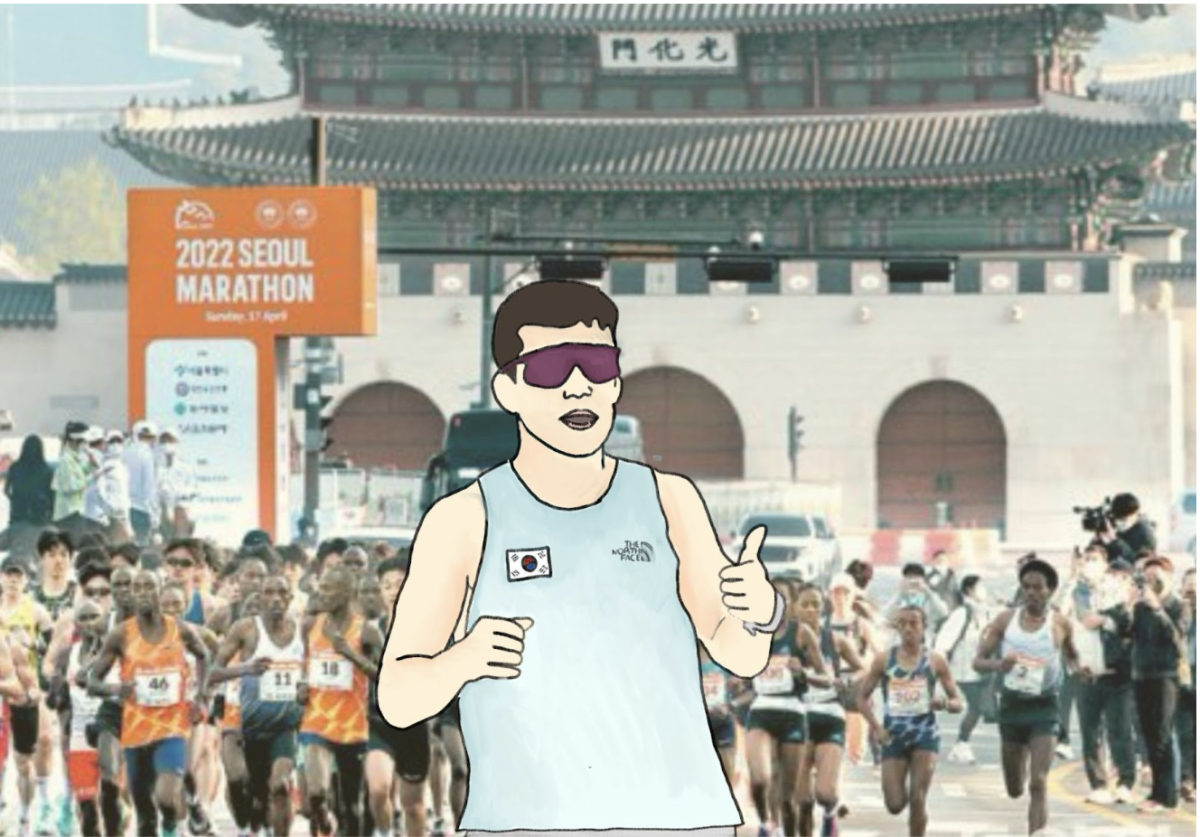
Walking around the streets of Seoul, one can observe an unusual spectacle: hundreds of people jog on narrow sidewalks in running gear, while police officers regulate traffic. Recently, Korea has experienced an influx of recreational runners jogging in teams and participating in marathons. Whether it be athletes, celebrities, parents, or youths, Koreans are constantly running, running, and running.
The surge in these “running booms” seems to be attributable to the conditions after the COVID-19 pandemic. Due to quarantine restrictions on outdoor physical activity, people became more eager to participate in sports activities that allowed them to engage and interact with one another after the pandemic was over. This started a wave of various sports trends across the country, ranging from golf in 2023, tennis in 2024, and finally, running in 2025.
“I suppose [the popularity] is a mix of people wanting to get healthy and also vanity,” Ilan Vaisman, varsity cross country coach, said. “But also, it’s a very low barrier sport. Sports like golf, for example, you really need to learn. Running? No, you just need shoes.”
Running also became a popular support because it is much more flexible: one can run anywhere at any time with no fixed rules on how it should be done. Therefore, individuals can adjust the sport to meet their specific needs, while marathon organizers can tailor their event to meet the needs of their target audience. For instance, corporation Hanhwa General Insurance created the Seoul Stroller Marathon to accommodate both parents and young children. Running is also an affordable option for students, eliminating the need to spend time finding a gym or purchasing equipment for various sports. Especially in a fast-paced, competitive society like Korea, where individuals often do not have time to spend on leisurely activities, running is becoming a sustainable activity.
“As student athletes, we usually have a lot of academic stress,” Ceyon An (11), varsity cross country captain, said. “Running is one of the methods for me to balance my mental health.”
The increasing number of running crews also contributed to the popularity of the sport. Running crews are especially popular among younger people in their 20s and 30s, as they provide them with a social circle they can stick with while exercising. Some say that running crews are effective in that members of the team encourage each other to push through, whereas if they had exercised on their own, they would have been less motivated.
The popularity of running has also corresponded to the increasing number of marathons. In 2022, around 346 marathons took place, and the number increased to 402 in 2025. Every week, marathons are initiated by different organizations across Korea for different purposes.
“Marathons are a good way to discipline yourself,” Alina Lee (11), avid runner, said. “It’s because you have to make a routine to run every other day [to prepare].”
However, the popularity of marathons also comes with a downside. Because most marathons occur in urban areas, regulation is necessary to keep runners safe from traffic. The constant occurrence of marathons caused many to complain about the excessive management that they face while driving.
Marathons have also caused injuries previously in Korea. In one case, a driver in his 80s accidentally crashed into a marathon runner who was running at 5 kilometers per hour. Although marathons were initially an activity enjoyed by a few, it is also becoming a social issue with their popularity.
“I think it is somewhat true that marathons can be disturbing to public traffic,” Alina said. “People who manage marathons should consider avoiding frequently used roads when planning routes.”
As running becomes more popular throughout Korea, it is also important that organizers carefully consider how their activities could affect other community members. After all, the reason behind running’s popularity is that individuals connect and encourage one another. By doing this, Koreans can keep on running, running, and running—sustainably.