During the massive digital memory offloading during the 2010s, Joshua Foer’s book “Moonwalking with Einstein” narrativized the rudimentary cognitive ability of memorization, effectively turning memory into an international sensation.
A quick glance suggests that memorization is a trivial skill. It is often marginalized by academic and professional institutions, domains where the emphasis on cognitive ability has shifted from the simplistic storage of information to deeper conceptual understanding.
Foer, however, identifies latent potential in this dying discipline.
He introduces ancient cognitive architectures rooted in practices from nearly two millennia. These intricate memory techniques are based on elaborative encoding, the process of associating facts with vivid, salient images.
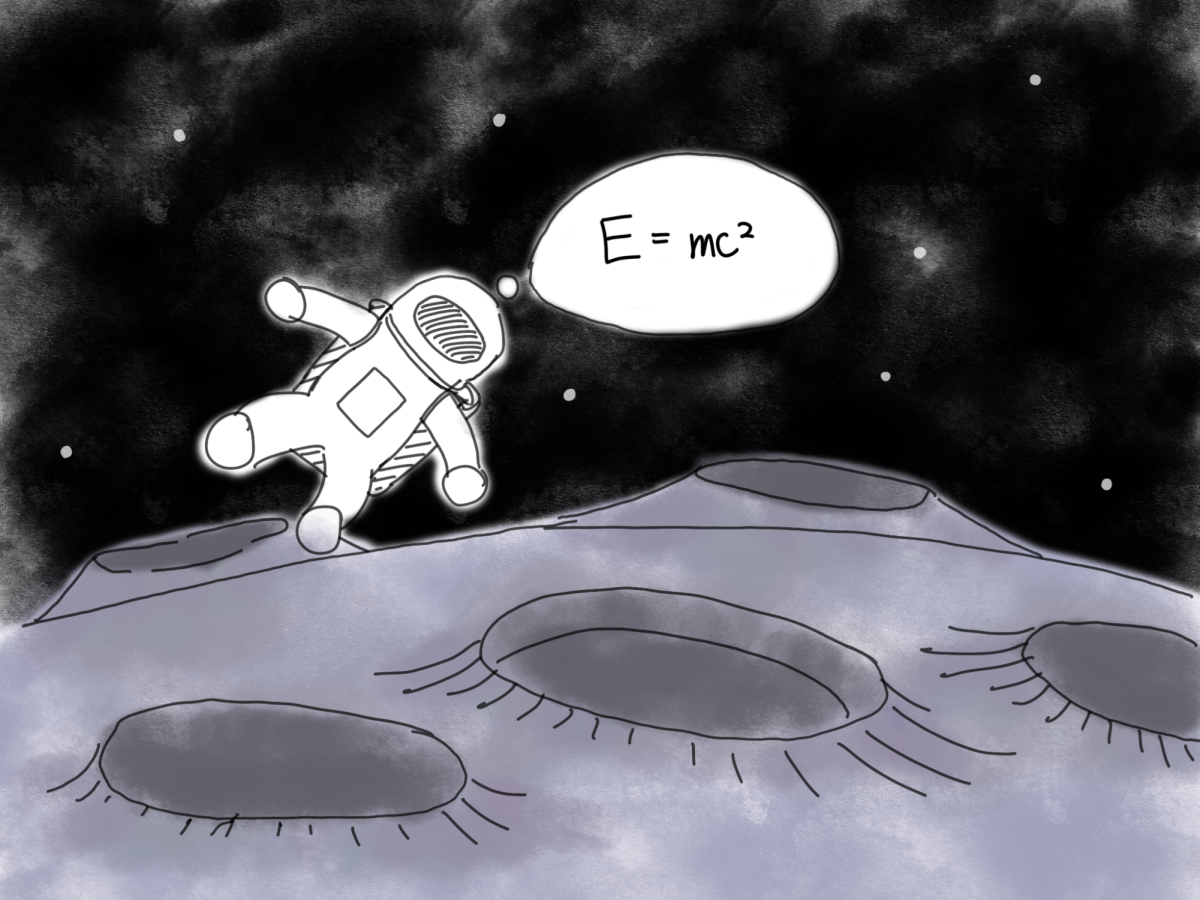
The phrase “Moonwalking with Einstein” exemplifies this system; it is the image Foer has paired with the four of spades, the king of hearts, and the three of diamonds. Linking memorable, near-outlandish scenes or images to monotonous, rote information, it enables even the most trivial semantics to be embedded in the mind.
“These techniques really work,” Andy Lee (11), reader of the book, said. “I tried following the steps of creating a memory palace, visualizing crazy images to represent objects on a to-do list, and placing these images around the mental layout of my house. Even after a week, the list was still fresh in my mind, even though I did not practice memorizing the list or anything.”
Through such outdated systems, mnemonists like Foer refine their ability to memorize multiple stacks of playing cards and thousands of numbers, reducing memorization time to mere minutes.
“It’s really admirable the dedication that Foer must have put into memorization,” Minho Chun (11), fellow book reader, said. “He talks about obstacles like the OK plateau and growth stunts in his memory practice, and it made me realize the importance of perseverance, discipline, and setting up good habits.”
By enduring prolonged, rigorous practice sessions over successive days, Foer became the US memory champion within one year, even setting an unprecedented national record in face recognition.
But perhaps Foer’s “Moonwalking” with Einstein unfolds a deeper underlying motif.
“Honestly, I do not think the techniques are super applicable to students because of the immense time and effort required to master them,” Haven Cha (12), book aficionado, said. “Also, there are not that many instances where students, especially SIS students, have to brute-force memorize the way competitive memorizers memorize playing cards and numbers.”
Despite the flamboyant and glamorous nature of memory techniques, their practicality is at best questionable. Even for Foer, the representative “brain” of America, forgetting the keys to his car or his wallet is a common occurrence. Foer explicitly states in his epilogue that the memory techniques he devoted months to had minimal influence on his ordinary routine. What hope does this bestow upon the masses who can barely dedicate 10 percent of Foer’s time to memorizing?
It is clear that Foer’s exigence does not lie in the archaic memory techniques; it lies in the experience, the people, and the salience of his journey in competitive memory.
After countless hours of research and practice, his conclusion does not justify his dedication to memory. Instead, he concludes his memory voyage with descriptions of his aberrant initiation into the Knights of Learning (KL7). This small club of elite memorizers is Foer’s final destination in his grand mnemonic journey.
As part of his initiation, he is tasked with memorizing 49 digits, drinking two pints of beer, and pecking a stranger’s knee three times. This bizarre yet poignant interaction with his closest friends is the ultimate closure for Foer. Not the medal, the fame, or the monetary gain, but the consolidation of meaningful, profound relationships, bound to last him a lifetime.
Perhaps it was never about mastering memory techniques surpassed by technological innovation, but about creating evocative memories, ingrained in the deepest crevices of his mind.
“To me, ‘Moonwalking with Einstein’s’ core message had very little to do with memorizing,” Haven said. “Foer urges us to pursue novel experiences to lead a more fulfilling and memorable life, like his journey into the world of competitive memorization.”
What Foer wants is not for us to languish in isolation, excessively optimizing memory techniques in his footsteps, or to feel compelled to memorize every passing moment of our lives; rather, it is for us to seek experiences that ornament our lives with rich, indelible memories.
In other words, Foer is asking us all: what is your “moonwalking with Einstein” moment going to be?