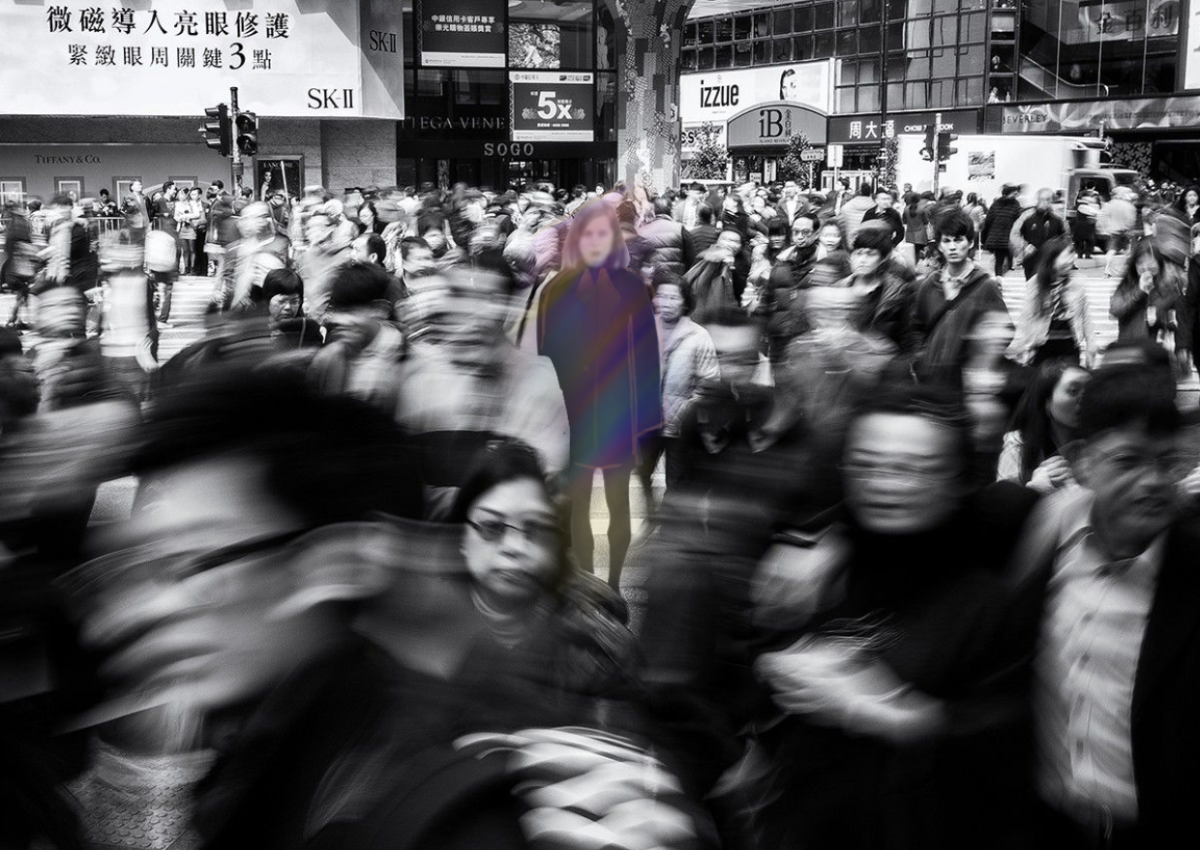
In South Korea, minimalism is not just a lifestyle but an aesthetic you wear on your clothes. At SIS, a flurry of monochrome colors consisting of black, white, and gray fills the entrance and the hallways. Hoodies, sneakers, and pants are consistently in dark, toned-down hues, making our school’s overall palette muted. SIS prides itself on allowing students to express themselves through their clothes, permitting any dress code that supports independent expression, but students seem to follow their own cohesive “social rule” regarding their clothes.
Any color outside of the monochrome spectrum is considered a rare sight, but this can not all be blamed on the student body itself. The monochrome culture is part of the harmonious Korean culture that the nation exudes to younger generations at an early age.
Korean culture, known for being uniform, often encourages adults and children to translate consonance into social manners, which include fashion tastes. Neutral colors, usually associated with cleanliness, neatness, and maturity, are often preferred over vibrant colors seen in more liberal countries like the United States, which encourages bright hues.
“I personally like to broaden my horizons in terms of my fashion taste,” Yoonji Huh (11), vibrant clothing wearer, said. “I did a personal color test and found out that I am more cool, and should wear more neutral, dark colors. But knowing this, I can not really resist submitting to my own clothing tastes with other colors that aren’t monochrome.”
Whether it be purposeful or not, the traditional culture of Korea and the consumption of a minimalistic lifestyle have impacted current generations. Known for focusing on harmony, Korean culture mainly focuses on humility and uniformity, especially during the modern age, where social circles and ranks are more persistent than ever. Korean minimalism, also known as Dansaekhwa, emerged as an art movement from the 1970s but slowly evolved into other media of modern art, such as K-dramas.
At some point, most Koreans began to see the limitations of relying on materialistic aspects of life as a source of happiness, demonstrating Confucian values, thus focusing on minimalism. Additionally, Korean homes and, by extension, fashion tastes, have increasingly favored minimalism with the rising popularity of single-raised households.
According to the CJ Logistics 2021 report, over 62% of all packaged clothing delivered to Korean households is mainly gray, white, and black. Experts state that the preference towards monochromatic clothing is not only cultural, but also practical.
“I think it’s easier to just wear something white and black,” Sylvia Lee (12), Korean citizen, said. “Sometimes when I’m too tired to choose, I can simply wear anything monochromatic. It’s bound to not look too bad, but also proves to be an easy route in the early mornings.”
For SIS students, wearing monotone colors can be an easier way of getting ready for school. Combining and matching clothes of different colors would make it more time-consuming to get ready, compared to the usual black and white combination that will guarantee a nice outfit. Buying fewer colored clothes can make it easier for people to recycle and reuse them, providing an economic incentive as well.
Additionally, monotonous colors such as black, white, or gray dyes are easier to reproduce in factories than brighter tones such as red, blue, or yellow. The combination of different colors also influences the prices of the outfit, thus making monotonous pieces a more affordable option.
“Personally, I wear more black and white clothes, maybe even some navy and gray,” Lauren Lee (10), monochrome clothing wearer, said. “I think it’s just more convenient. I can find clothes that are monochrome more affordable and easier to dress in than ones with color.”
Monotonous clothing is a vital aspect of Korean culture, known for showing submission and conformity with practicality. However, the enforcement of this culture can also have its consequences. Younger generations are socially advised to limit their self-expression through their clothes, creating an environment where seeing color is a rare sight. With the implementation of liberalist values in an ever-evolving culture, allowing self-expression through fashion in Korea is a small but influential step towards a more accepting society.