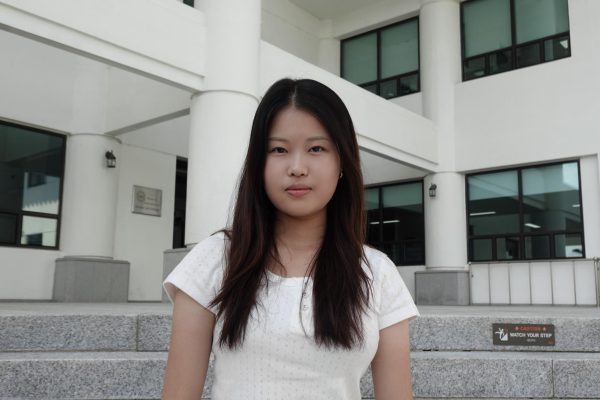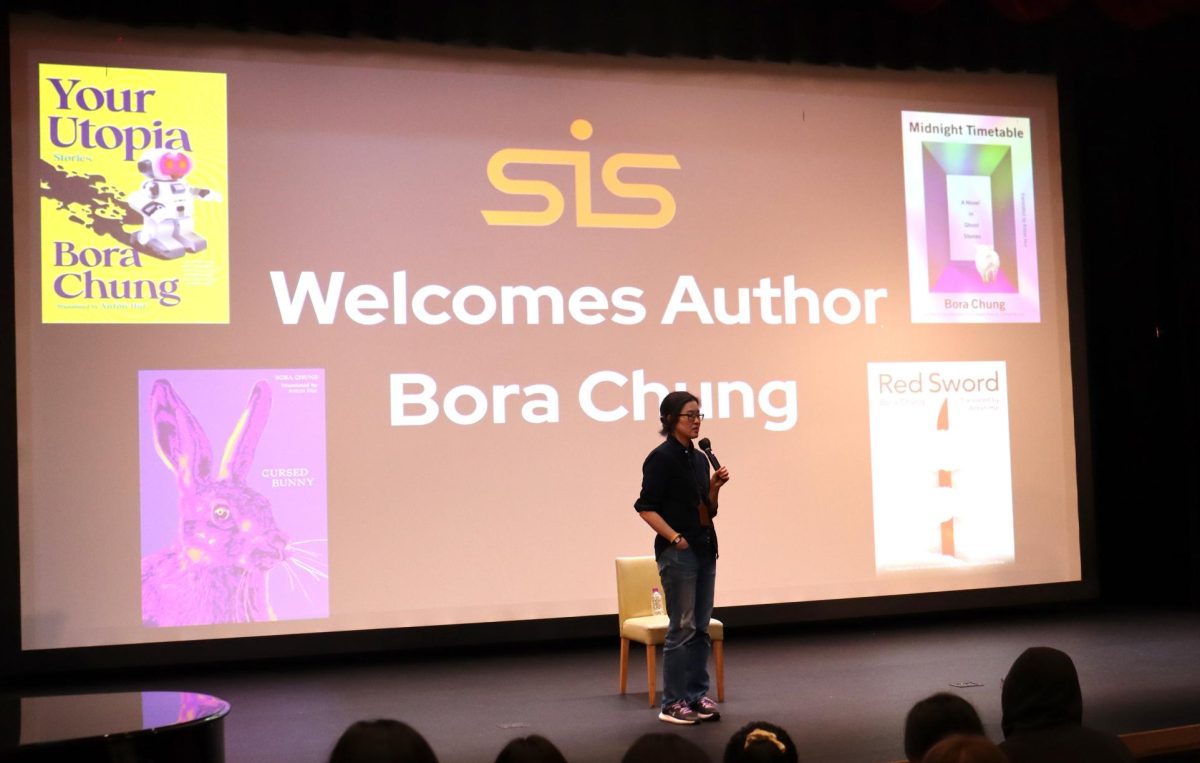
Acclaimed author Bora Chung returned to SIS on March 9 for the second time, holding a Q&A session with English 11 students in the auditorium. During the session, students passed microphones to ask questions in an open discussion, allowing Chung to respond spontaneously to each question.
English 11 students had read Chung’s short story collection “Cursed Bunny” prior to the session, exploring the various hidden meanings behind the stories. Along with questions about the collection, students also asked about her writing process, inspirations behind her ideas, and experiences as a professional writer.
While much of the conversation centered on “Cursed Bunny,” Chung also introduced several of her other works, including “Your Utopia,” “Midnight Timetable,” and “Red Sword.” In the end, the session provided an opportunity for students to reflect on their own creative writing and gain insight into Chung’s approach to writing.
Following the main auditorium session, Tiger Times Online had the opportunity to ask Chung a few specific questions about her recent genre shifts, her worldview, and her advice for aspiring SIS writers.
Q: Your newer collections after “Cursed Bunny” focus more on science fiction and futuristic technology. What inspired this shift?
A: “I suck at science. The stories in “Your Utopia” were written during the period when I was teaching in Korea, and my students would bring up scientific ideas and technologies during class discussions. I [consider] the book almost like a gift that came from teaching and interacting with my students.”
Q: As someone who is active in protests and social movements, how do you balance darker themes in your work with hope for a better future?
A: “To be honest, I personally don’t believe in hope in a simple way. But I do like going to protests and being involved in social movements. When I go there and see people gathering together for the same cause, I sometimes start to feel something like hope. I also find meaning in listening to people’s [stories] during demonstrations and spreading their stories through my work. Seeing people stand together against injustice, especially through feminist organizations or queer movements, reminds me that people can still come together and support each other.”
Q: Many students at SIS enjoy creative writing. What advice would you give to students who want to experiment with unusual genres like horror or science fiction?
A: “Do whatever you want to do. The teenage years are the only time in life when your brain is still very flexible, and you can look at the world with fresh eyes. At the same time, you already have enough experience to start understanding how the world works. Write whatever you want, and cherish that freedom.”