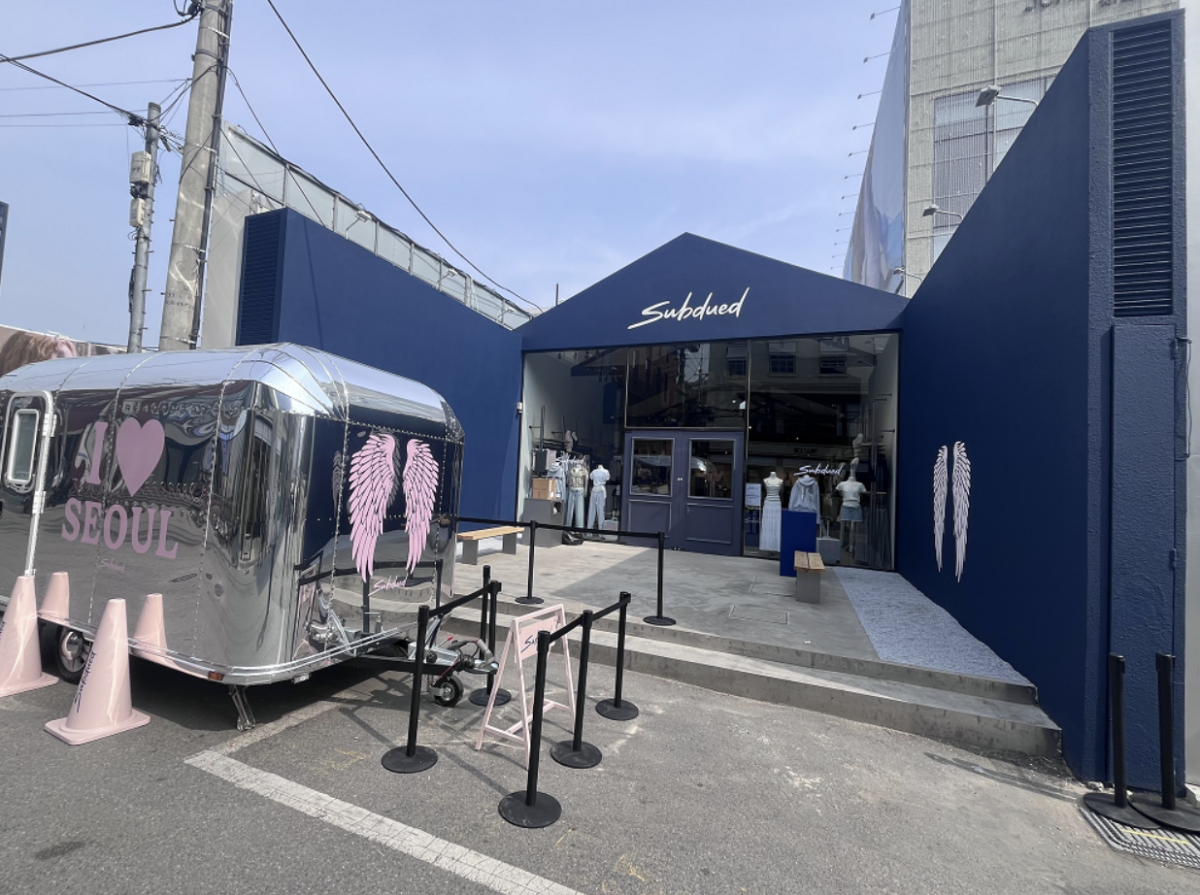
For Koreans, shopping in Seongsu is not complete without stops at Brandy Melville, Nyunyu, and now, Subdued.
Subdued, an Italian fashion brand marketed to “Gen Z” girls, had its grand opening in Seongsu on April 4. With rising anticipation about the opening of the Subdued flagship store, many international students and shoppers from abroad were quick to notice the brand’s promotions. Subdued attained a larger audience in Korea through its bold social media campaigns in recent months. Even the public who were previously unaware of the opening got exposure through TikTok or Instagram, months before the store opened.
“I went to Subdued on its opening day after watching their advertisement on TikTok,” Grace Kim (9), Subdued customer, said. “The queue was really long even in the morning—there were a bunch of influencers who were there to take pictures, and they had a separate entrance line with invitations where they received tote bags and gifts.”
The rise of new clothing brands in Korea significantly impacts its trend and culture. But is everything beneficial? Many fast fashion brands put emphasis on aesthetics and looks. Their stores are laid out in a very specific way that suits the brand’s aesthetic—even the employees in the store are required to fit the brand’s visual requirement.
Brands taking active approaches with social media exposure can be seen across the case of Brandy Melville and Nyunyu. Clothing brands have started marketing their stores even before the opening, bolstering exciting anticipation. They also make multiple videos with influencers to trigger the fear of missing out (FOMO) for many of their target audience. Subdued opening even had a separate line for influencers to receive an invite, promoting themselves again through social media.
“The biggest reason why I visited Subdued on their opening day was that many of my friends were going and everyone on social media was visiting to buy their products,” Yena Kim (11), shopper at Subdued, said. “Watching lots of TikTok stars or international school kids going to Subdued certainly made me want to go to the store as soon as possible.”
The overall advertising strategy of these contemporary clothing stores is especially effective for the younger generation, who are sensitive to trends. However, constant reinforcement of FOMO promotes overconsumption and impulse spending. In particular, products from contemporary brands like Subdued or Brandy Melville, being in an affordable price range, further encourage consumption among the younger generation.
Overconsumption in fashion, along with the rise of fast fashion, has a detrimental impact on society. The trend encourages spontaneous spending of the younger generation, creating a “buy-throw-away” culture. Even without the certainty that they would wear the clothes, the younger generation purchases the clothes because it’s trendy, affordable, or aesthetic.
The continued cycle of “buy-throw-away” culture also harms the environment: the industry is responsible for 8–10 percent of global carbon emissions, 20 percent of industrial water pollution, and usage of more than 3,500 chemicals that are hazardous to human health.
Especially with the lack of a proper management system for clothing disposal, the rise of fast fashion brands and their consumption has also led to a 400 percent increase in clothing consumption compared to 20 years ago. Approximately 87 percent of fiber input is burned or sent to landfills.
The detrimental impact that contemporary brands like Subdued has on the younger generation and the environment is largely overlooked. Consumption happens without the awareness that one clothing item bought contributes to the degradation of the environment and culture.
With this in mind, can the grand opening of Subdued in Seongsu, Seoul, be truly celebrated? Can we really stop fast fashion though? Is there really a solution?