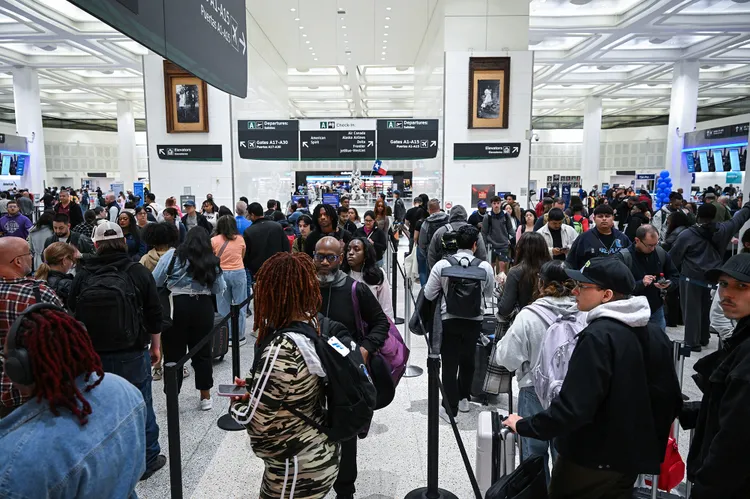
Airport security lines in the US have skyrocketed in recent months due to the Transportation Security Administration (TSA) shutdown following a funding reduction. In late March, airports in major cities such as Chicago, Atlanta, and Baltimore experienced wait times exceeding four hours, leading to extensive delays, missed flights, and growing frustration among travelers.
“It is concerning that a funding disagreement can lead to something so disruptive,” Jaeha Park (10), aviation enthusiast, said. “This just goes to reveal the ongoing instability of airport governance, and I think it is unfair to people who are forced to wait for hours with the possibility of missing their flight.”
The sudden increase in wait times is mainly attributed to a shortage of TSA officers at security checkpoints. The Department of Homeland Security, which oversees TSA, has not received any funding due to Congress’s inability to come to a budget agreement, thereby causing a partial government shutdown. With reduced funding resulting in lower wages and fewer staff, airports have struggled to maintain efficient screening operations during peak transit periods; a significant portion of TSA workers subsequently called in sick or quit because of this funding shortage. The situation had escalated to the point where nearly 40 percent of the security staff at George Bush Intercontinental Airport in Houston did not show up for work, a concerning rate that reflects flaws in infrastructure and governance.
“If something as essential as airport security can break down this quickly, it raises significant concerns about how prepared we are for larger disruptions that may occur in the near future,” Geunhyeung Hong (12), aerospace enthusiast, said. “I think solutions like better emergency funding plans, enhanced training for staff, and investing in more developed infrastructure could help prevent this from happening again.”
Airports, operating with only half of their TSA checkpoints open, are facing this crisis amid a surge in passengers traveling for spring break. The ongoing March Madness NCAA basketball tournament has also amplified passenger traffic, with many fans and teams traveling through airports immediately after games.
“Spring Break was absolutely chaotic,” Ethan Choi (10), airport line witness, said. “The lines at the airports in Chicago extended all the way to the front entrance of the airport itself, and it felt like I was waiting for hours just to get past the security checkpoint.”
To alleviate the issue, governments have deployed Immigration and Customs Enforcement (ICE) agents to major US airports, hoping to maintain airport operations. Although these agents are actively assisting with tasks such as crowd control, entrance monitoring, and ID checks, they are not trained to perform the primary screening functions of conventional TSA officers. Their involvement has raised broader concerns regarding the agency’s role in domestic travel environments, with security officers primarily worried about the long-term implications of their active replacement by private sector employees.
In response, travelers have been finding new methods to get through security lines more efficiently. Many have resorted to enrolling in the TSA PreCheck Touchless ID program, a verification process that uses biometrics similar to the existing Clear system. Passengers can also queue in a separate Touchless ID lane at security checkpoints with a much shorter wait time.
The TSA staffing crisis highlights serious vulnerabilities in internal airport security, emphasizing the urgent need for stable funding, an improved workforce, and sustainable solutions to ensure efficient and convenient travel experiences.