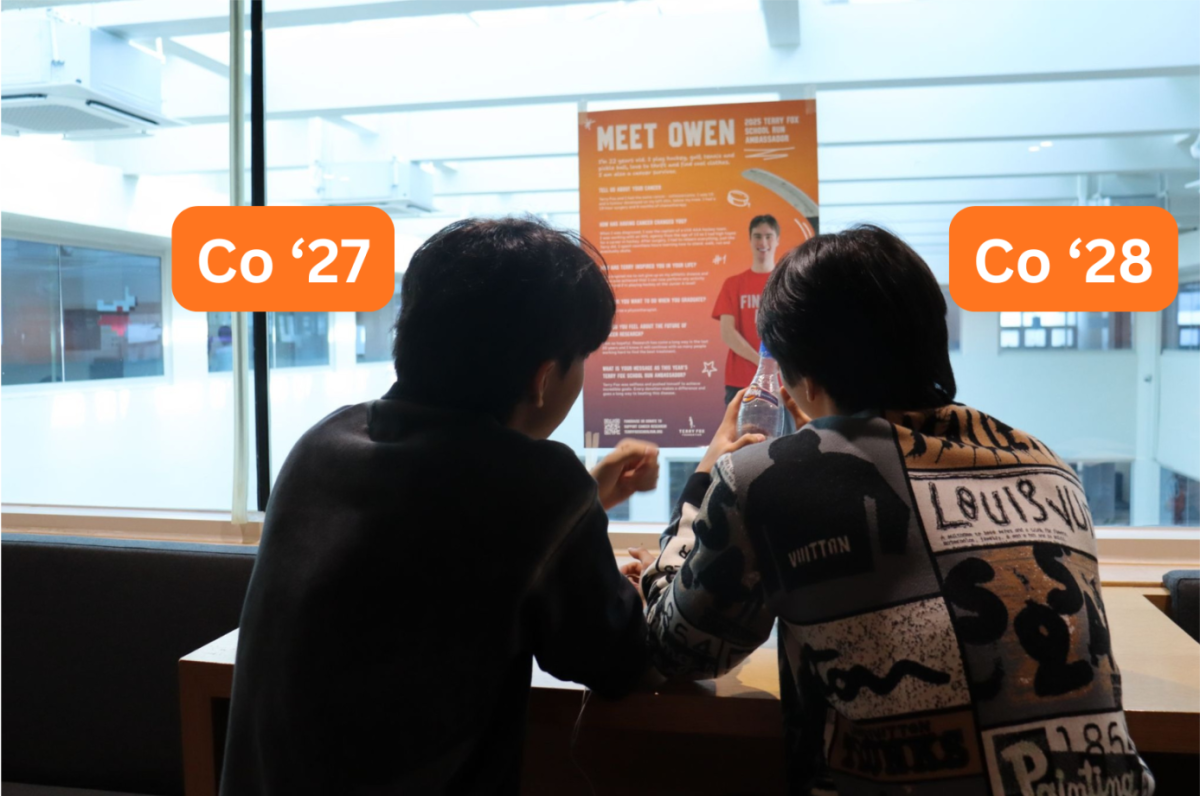
Most students have at least one class with students in different grade levels. This is often due to the vast number of students from multiple grades who take the same course, resulting in several classes containing a variety of grade levels. Whether it is an AP class or an orchestra class, these classes offer a unique aspect of learning for students, especially those who want the opportunity to collaborate with people they are not accustomed to working with. While some believe that these mixed-grade classes promote peer learning and provide a quasi mentor-mentee system, the reality of these learning environments is much more complex.
One of the significant issues with mixed-grade classes is the intimidation that underclassmen may feel when placed with upperclassmen who are one to two grades higher than they are. This can make younger students feel hesitant to share ideas, while older students become impatient due to the slower pace of lessons. As a result, teachers may face the pressure of balancing expectations and instructions while ensuring all students are equally supported; these issues can reduce the overall effectiveness of the class. For instance, if a teacher introduces an assignment that requires independent research and analysis, older students would understand the instructions more quickly, while others struggle with the criteria and need step-by-step guidance. As the teacher takes time to clarify the expectations for those who are confused, the students who are more oriented lose momentum and become disengaged by the pause in learning.
“The biggest challenge is that students are at different skill levels, so it can be hard to keep up or stay challenged,” Chris Ahn (11), US History upperclassman, said. “For example, in my US History class, it is much more different compared to same-grade classes; there is more variety in experience and perspectives. While this may seem like a good thing, I find it hinders my ability to effectively grasp new concepts and information.”
Another issue with incorporating mixed-grade classes is the limited peer connection between older and younger students. Because they are often at different stages of social and academic development, it can be challenging to form genuine friendships or collaborative dynamics. This is evident in many classrooms where one side is filled with underclassmen and the other side is filled with upperclassmen. Furthermore, older students may already have established friend groups and focus more on college preparation, while younger students are still adjusting to the new high school environment. This gap can make simple group projects or class discussions feel very divided, lessening the sense of community that usually promotes effective learning and communication.
“I usually find myself talking only with other Sophomore students in my AP Biology class,” Justin Yu (10), AP Biology underclassman, said. “I think it is pretty difficult to collaborate with classmates who are not from the same grade; it is as if each grade is separated in a social sense that prevents true connections with other age groups.”
The considerable gap in background knowledge and classroom expectations is another challenge in mixed-grade classes. Older students often enter with more developed study habits, stronger writing skills, and familiarity with classroom procedures, while younger students may still be adapting to high school workloads and rigorous assignments. This disparity can lead to uneven participation and understanding of the content, as underclassmen may struggle to keep pace with advanced discussions or sophisticated material in various AP classes.
“Due to the significant age difference, I have difficulties in the ways I can approach underclassmen as an upperclassman while not giving them a sense of pressure,” Seungwoo Oh (12), AP Biology upperclassman, said. “These classes prevent me from reaching my full academic potential because they make me lose my focus. Surrounded by people that I really do not know frustrated me at the beginning, which might have definitely impacted my academic performance in the class.”
For many students, the result of these mixed-grade classes is a learning environment that feels fragmented and isolated rather than inclusive and engaging, deterring them from reaching their full potential. To ensure that everyone can develop academically at a similar pace, there should be a reconsideration of how mixed-grade classes are structured and supported.