A doctored video of a student desecrating the Constitution. The rampant #PizzaGate conspiracies. Debunked photos of the police raiding and burning a protest camp. The spiraling list of viral fake stories goes on, largely shared through popular social media apps. As the role of engagement and visibility begins to take precedence over substance, politics is increasingly being shaped by discourse on social media.
In a Forbes survey, 50% percent of Internet users said that they first hear about the latest news through social media rather than an official news station, while most users spend only 15 seconds or less on news articles. This allows influencers even greater control over political narratives circulating throughout the Internet, illustrating the growing public reliance on social media as the primary source of political news.
News has become more closely aligned with engagement on social media platforms. As the algorithm rewards posts that garner more online engagement—often those with more eye-catching titles and extreme statements—influencers have begun creating content with more polarizing opinions.
Unlike professional journalists, social media influencers are also not held to professional standards or accountability measures. Consequently, some influencers may spread misinformation without facing repercussions, intentionally or unintentionally. This has also led to more sensationalized accounts of political events, geared towards virality rather than substantial political discourse.
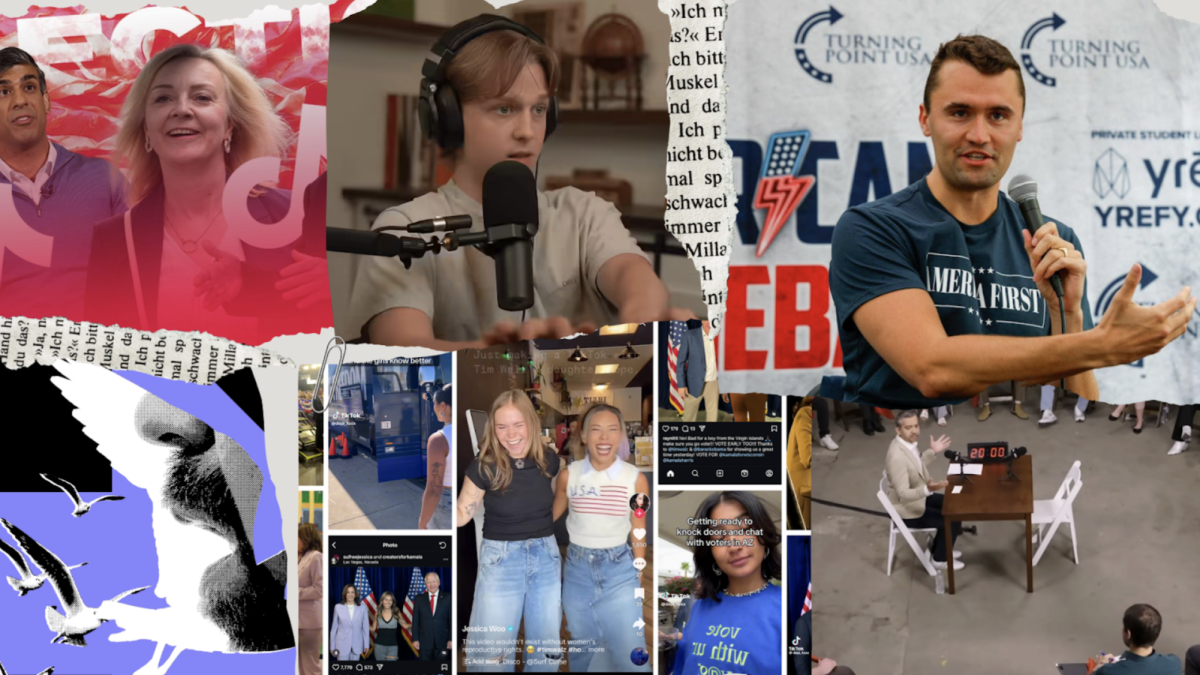
Famous examples include late political activist and media personality Charlie Kirk, who filmed and posted short clips of his political debates with college students, and his rival Dean Withers, a political commentator and live streamer who gained prominence through TikTok. The format of their posts—like many political influencers—tends to prioritize witty soundbites or “gotcha” moments, which are often taken out of context as they are circulated across social media.
These types of posts are usually more divisive than constructive, amplifying political polarization. As different influencers push extreme political ideas and unverified information, it becomes more difficult to evaluate their credibility. Instead, users often hold drastically different interpretations of political events based on online narratives.
Social media algorithms also feed into this polarization because they personalize user feeds by analyzing user behavior—such as likes, clicks, or even watch time—to push content that aligns with the user’s past behavior. As users follow political influencers and join communities that confirm their political ideas, they risk forming echo chambers, or isolated groups of like-minded people.
Election campaigns have also begun to take advantage of the rise of social media as a key factor in politics. During his election campaign, former presidential candidate Mike Bloomberg offered influencers $150 to post promotional content advertising his campaign in an attempt to appeal to Gen Z voters. This move points to the expanding power of popular influencers over citizens’ voting tendencies.
While social media influencers can provide valuable information about political news and offer a space for like-minded voters to interact, the rise of political influencers also comes with several risks. In an increasingly digital world, it is crucial to remain aware of the biases and messaging behind influencers’ content.