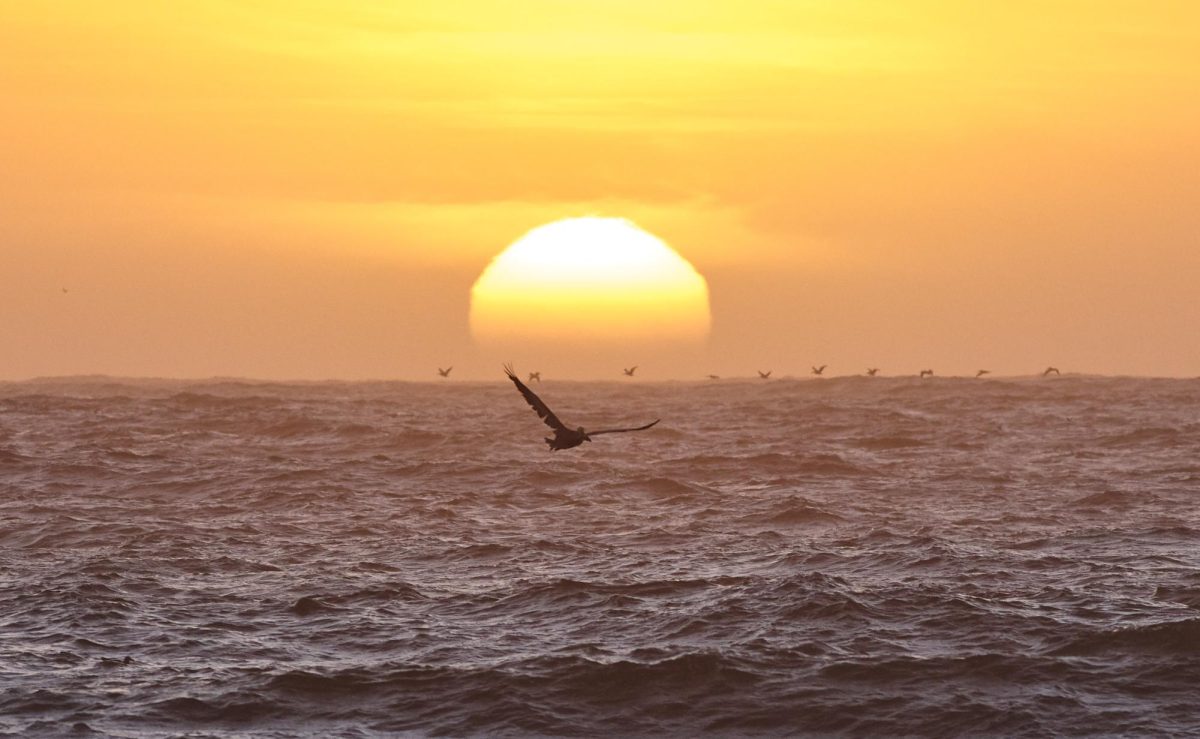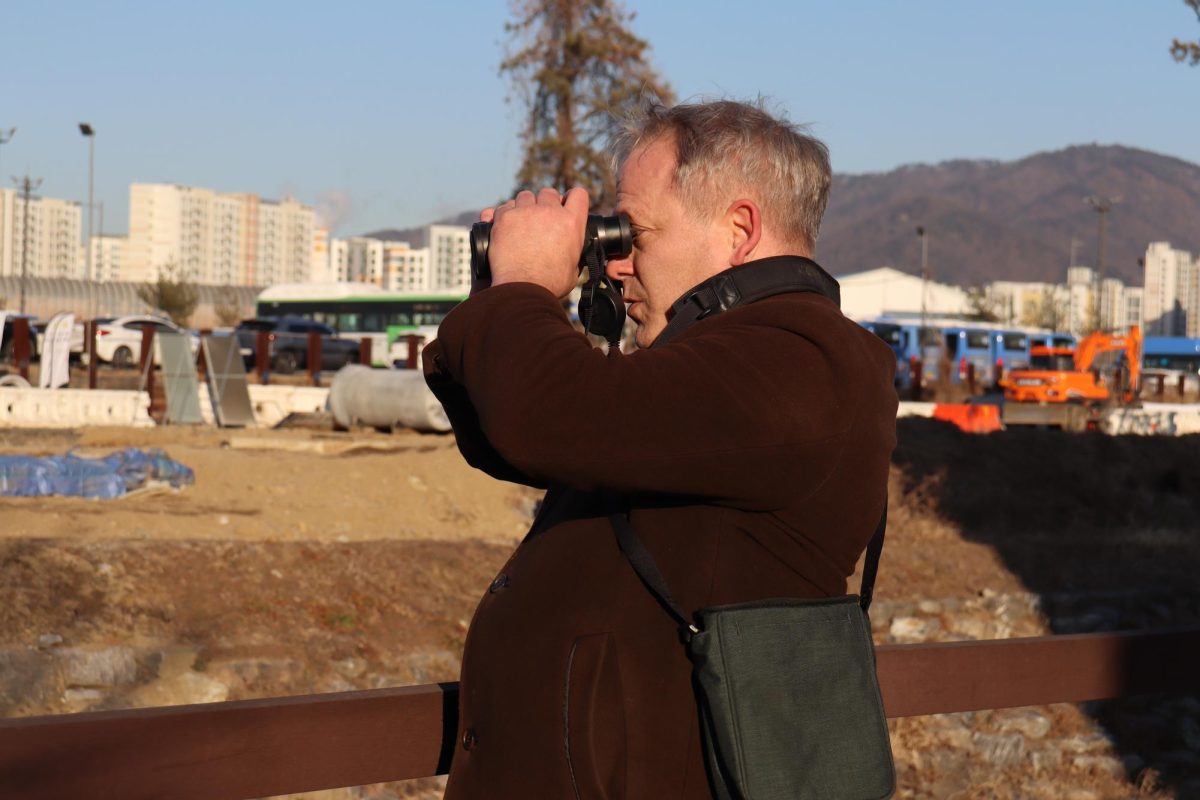
Trees, plants, and birds surround us all—but when was the last time you actually saw them?
From the snow-dusted gardens that bedeck our school to the pigeons that are so common as to only exist in our peripheral sight, more often than not, we take the world we live in for granted. We have conditioned ourselves to accept these elements of everyday life as unmoving truths.
However, for Dale Fiess, AP Environmental Science teacher, spotting the hidden choreography of motion and life beneath this predictable pattern is his lifelong obsession.
It all started in Thailand with a pair of beat-up binoculars and a petite bird encyclopedia, stranded in the middle of the forest. Mr. Fiess’s birdwatching avocation had begun as a simple way to idle away the hours, a small extension of his general interest in ecology.
“The birds in Thailand were gorgeous,” Mr. Fiess said. “They had vibrant and exotic birds that made birdwatching captivating and rewarding. That satisfaction and spur of motivation from every successful find drove me to continue birdwatching during travels, or to take a break from the world once in a while.”
Although high-performance binoculars that one can acquire for this hobby vary in price, with the proper equipment, each feather on a bird’s wing can be identified, with picturesque patterns and unique features catching the eye. More light converges in the barrels of the binoculars than it usually does on our retinas, allowing users to see unprecedented levels of detail.
From close up, the birds we often generalize as squawking city pigeons become entirely different creatures. They become ethereal aerial beings with many subtleties that elevate their allure.
“Birds are truly gorgeous,” Mr. Fiess said. “They never fail to amaze me, and every time I see them, it is always a treat.”
Despite the hobby’s unassuming reputation, planning a birdwatching outing is far more complex than it seems. Not only is locating optimal territories crucial for birdwatching, but the seasons must also align with intricate migratory patterns shaped by various climatic conditions.
“Cranes migrate to South Korea during winter,” Mr. Fiess said. “The seasons you find these birds are different for every species, so there is a lot of work that goes into learning these patterns. It took quite some time to get the hang of [birdwatching]. It is the challenge that makes it worthwhile for me.”
Identifying bird species poses its own challenges; given the wide variety of characteristics and anatomical structures, a bird-watcher must be proficient at discerning to make accurate identifications.
Yet, the locations and seasons reveal something far more deceptive than the challenges they pose, a nearly paradoxical reality that elevates the ordinary to the extraordinary.
“The best birding spot in the Bay Area, surprisingly, was the Oakland airport,” Mr. Fiess said. “In the wetlands during winter, the birds were all over the place, and once, I saw over 93 species of birds in one day. As in Korea, I saw many cranes in the DMZ area. They have a lot of cranes coming from other countries, especially during the winter.”
Under the repetitive plume patterns and formulaic migration cycles lies an almost ironic truth. The boggy field of moss and mud beside an industrial airport draws more birds than any other vicinal environment. A militarized border acts as a refuge for fragile, elegant birds.
The most vibrant ecosystems hide in the most unassuming places. Only those who know how to look ever realize what is there.
For Mr. Fiess, spotting these hidden wonders is his passion, an endeavor steeped in reverie. Even the unforgiving winter winds hardly hinder his admiration and curiosity for such gracious creatures.
Perhaps for us, too, a world of wonder awaits, a mere pair of binoculars away.