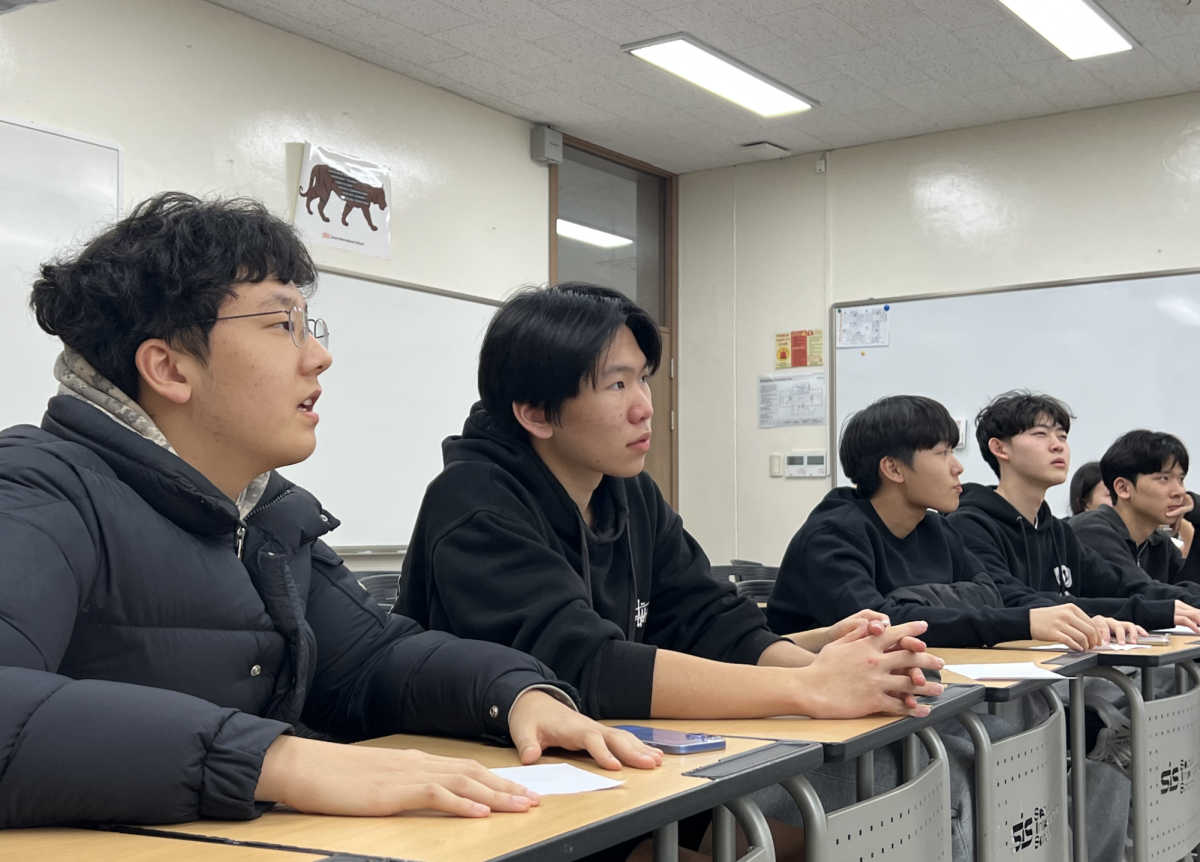
Mu Alpha Theta, SIS’s prominent mathematics club, has recently announced that they would be making significant changes to its club structures. The executives have decided to change competition team lessons to include lectures to facilitate better understanding, along with one on one help offered in a designated area of the clubroom. A new system of homework is to be implemented as well, where students will now have to formulate a problem of their own from the topic to promote actual research of the topic.
With 50+ members, the club is divided into two teams: competition and general. The two sections prepare students for different aspects of math. The competition team prepares the students for competitions such as American Math Competition (AMC) or South Korea International School Mathematics Competition (SKISMC). The general team, however, focuses less on competition-style math, and more applied mathematics, such as the math behind card games at the casino.
New executives were announced for the second semester, and with new execs came innovative ideas. “We are trying to change the format of the lecture to include slideshows to help facilitate understanding amongst students,” Minjoo Kim (10), competition team captain, said. “We also want to make sure that students are well supported and retain the information they are taught.”
Along with engaging more in the lectures, the homework process is to be changed as well. The traditional format for homework was to turn in worksheets on Google Classroom. However, there was one problem. Since students were individually tasked with completing their homework, there was no way to truly confirm students’ understanding of the material, as they could easily use outside sources to get the correct answers. To prevent this, a new system is currently being developed where students would propose one homework question that is relevant to the topic, ensuring that the students actually research the topic and get to know more.
“Members relying on ChatGPT to solve problem sets was an issue we deliberated over in my term as well,” Russell Jin (12), former Mu Alpha Theta president, said. “The proposed system of members suggesting problems seems to encourage members to engage more actively with the problems. Of course, we might see limited participation if it is not made compulsory, but I believe they are making a step in the right direction.”
Lastly, the execs have decided to make the meetings more interactive, moving beyond problem-solving and lectures, and include more interactive activities that allow people to stand up and discover their passion for mathematics. Plans to participate in more school events have been made, adding to the already existing celebrations, such as Pi Day, hosted on March 14. With the new changes in leadership, Mu Alpha Theta hopes to revamp the club and innovate it into a more immersive and welcoming learning experience.