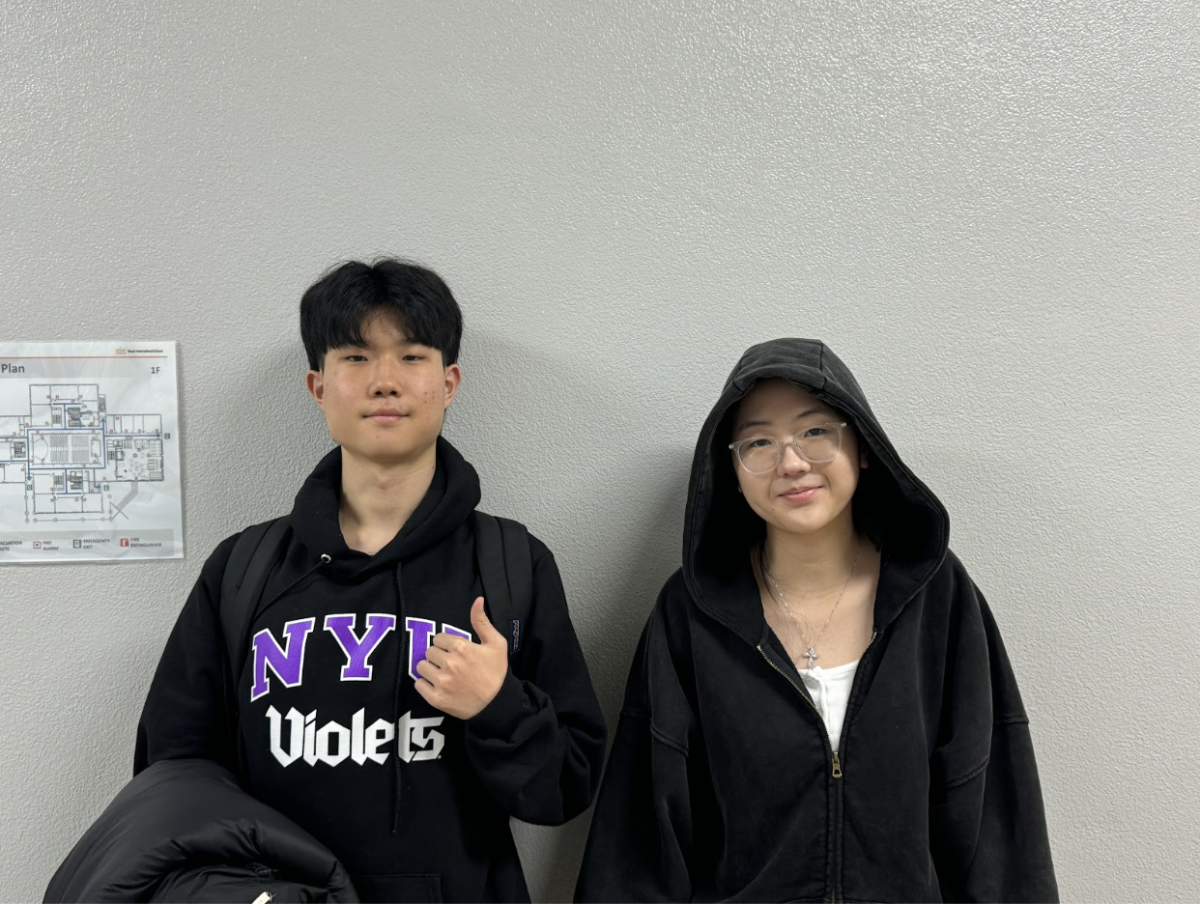
Behind the honors and titles of SIS’s individual sports teams are crucial figures working quietly, consistently guiding them to those results: the managers. Without managers, sports teams would not be able to achieve the variety of results that reflect the prestige of athletics at our school.
Although being a manager means being treated as part of the team and given the privilege of being exempt from school during games, it also means they must attend each match and record statistics and footage for their team, even though they are unable to participate in the actual games and record live match results. Because the level of dedication required to serve as a manager is high, many are deterred from signing up. Only those determined enough to take the responsibility are capable of being selected as one.
“I think the most challenging part of being a manager is being consistently up to task with all of the games and keeping all records from each individual match,” Billy Kim (10), varsity swim team manager, said. “Despite the high level of concentration that keeping track of these factors requires, I still enjoy being the swim team’s manager because of the inclusivity and high team spirit fostered by the members of the team. In fact, this winter season was my second season as a swim manager, and I would not have been able to do it if I had not felt welcomed as a part of the team, being a manager.”
Other managers provided input on whether they are willing to hold another season, given the heavy responsibilities of management. They provided insight into the advantages and disadvantages they observed across different numbers of managers on each team.
“I joined as the varsity boys basketball team manager because I wanted to be a part of the environment,” Jun Lim (12), varsity boys basketball team manager, said. “To be honest, I do not think I would do it again because of the dedication and effort the task requires. I would rather play as an actual player on the team than not be part of the action, staying as a manager if I can. However, I think the most valuable aspect I got to experience as a manager was working on my collaboration with different managers, as there were multiple selections this year.”
The number of managers being selected per team is also a big factor in determining the difficulty of being a manager. Whether the workload can be split among the team’s managers or not affects the ease of being a manager on that team. For sports that offer only one selection slot, the entire burden of tracking records and managing team members rests with them.
“Having more than one manager per team is definitely an advantage from the managers’ standpoint,” Yena Kim (11), varsity girls basketball team manager, said. “Because I work alone for the girls’ team, I find myself struggling to keep up with all the workload given as a manager, but also with the ongoing academics. I think it is especially more difficult as I am a junior, joining the team during the peak period of academic rigor from all the summatives given across different subjects.”
Although managers’ contributions may be hard to notice for the average spectator, they deserve greater recognition for their efforts on behalf of the team. Given the many factors involved in managing a varsity sports team, it is imperative to show greater respect and appreciation for those who sacrifice their time to support their fellow athletes.