When students gossip about classes in the hallways, the conversations that surround them are simple: the “unjust” grading system, the next unit exam, the upcoming quiz they have dreaded for days.
But the lessons Hana Jeon teaches often go beyond the confines of schedules and syllabi.
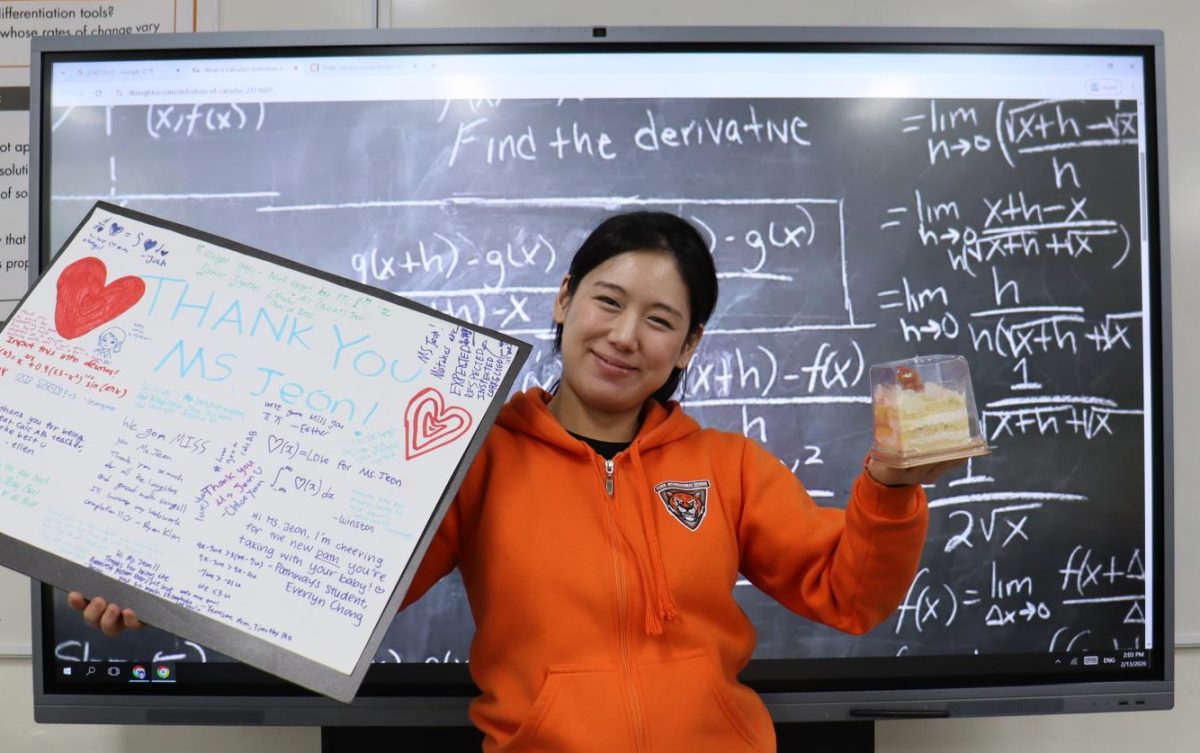
Ms. Jeon has been a teacher here at SIS for over six years, starting in 2019 as a middle school math teacher. Throughout the years, she has taught Algebra, Geometry, Precalculus, AP Calculus AB, and Statistics, gradually cultivating her presence in the math department.
“My teaching career at SIS began as an Algebra I teacher,” Ms. Jeon said. “Although I enjoy working with high school students, one thing I miss the most is getting to know everyone in the grade level and connecting with individuals in middle school.”
Throughout her SIS career, she has sparked “Eureka” moments in students, pushing them to develop valuable skills and perspectives and flourish into exceptional learners.
“For me, the best memories come from lessons that went really well,” Ms. Jeon said. “I feel genuinely excited when I see students motivated to learn and work together by constantly communicating their ideas with each other. Watching students challenge themselves with persistence and grow in confidence in the end reminds me why I love teaching and makes me happy to be an educator at SIS.”
Although Ms. Jeon’s breadth of mathematical mastery signals her meticulous teaching demeanor, her fundamental principles go beyond the comprehensive, impeccable curricula she crafts; they influence the very nature of her community.
“One aspect of SIS that was a pivotal factor in my dedication was the collaboration among teachers,” Ms. Jeon said. “At SIS, teachers work together all the time to discuss goals, design lessons, score assessments, etc. I have worked with many mentors and received valuable feedback that has helped me grow professionally. I also hope that I have been able to influence my colleagues in a positive way as well.”
As a champion of constructive feedback, she demonstrates her tenacity to reach her full potential. She constantly reflects on her pedagogy to provide her peers and students with lessons that transcend mathematical formulas and equations.
“While pattern recognition and problem-solving skills are important, one of the hidden underlying skills in math that I value the most is having a growth mindset,” Ms. Jeon said. “Often, the approach you are used to taking to solve a problem may not be the only way or even the best way. By being open to different strategies and learning from peers, one may grow into a stronger and more confident math learner.”
The growth mindset she embodies is a subtle reminder for us to embrace this mental posture and depart from orthodox conventions—lessons that underlie our mathematical journey.
As great as the implicit lessons Ms. Jeon embeds into her lessons, what truly sets her apart from the average teacher is her persistent effort to foster authentic, individual bonds with her students. She goes beyond the expectations set for teachers, gradually shifting students’ expectations.
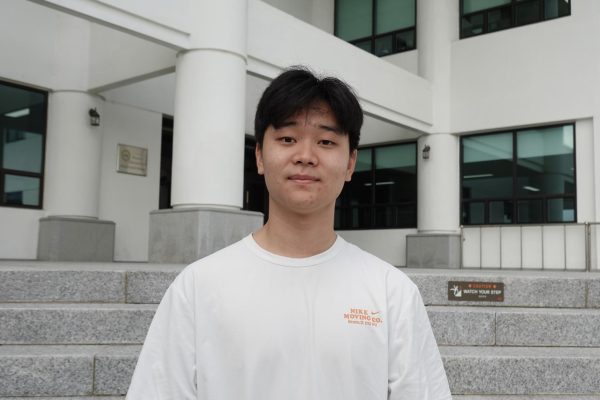
“As a senior at SIS, I can confidently say most students feel stressed in the math department classes,” Ryan Lee (12), Ms. Jeon’s former student, said. “But taking AP Calculus AB with Ms. Jeon honestly changed that for me. What made the difference was how she prepared us. Before every unit test, she would remind us not to lose easy points, like writing units or clearly stating the correct theorem. She would even repeat it right before handing out the test, usually saying, ‘Guys… so… every time there’s an integral, what should we make sure to include?’ Those small reminders honestly saved me from getting cooked more than once.”
Ms. Jeon will be taking maternity leave until the end of the 2026-’27 school year, but it will not impact the profound presence she leaves behind.
Teachers are more than mere instructors; they are inevitable beacons that shape students’ behaviors, habits, and the very essence of their temperament. Perhaps the true curriculum that teachers like Ms. Jeon ingrain in us is the set of habits and perspectives that pervade our school culture that bypass our recognition.
“I would go up to her desk, trying to argue that my mistake was ‘minor’ and not ‘major,’ even though I honestly fail those negotiations most of the time,” Ryan said. “But instead of it feeling awkward, we always end up laughing about it. So I walk back to my seat, not necessarily with more points, but definitely with a bigger smile. Her effort to keep the class atmosphere bright was honestly the best part of Ms. Jeon’s class. On days when I was tired or stressed from lack of sleep, walking into her classroom always felt refreshing and gave me a boost of energy, except maybe on unit test days. The way she tried to interact with every student and even created fun, memorable songs for important equations is something that will always stay in my SIS memory.”
Ms. Jeon leaves us one last message, one final reminder that underscores the implicit lesson she has taught us all along:
“Mistakes are expected, respected, inspected, and corrected.”