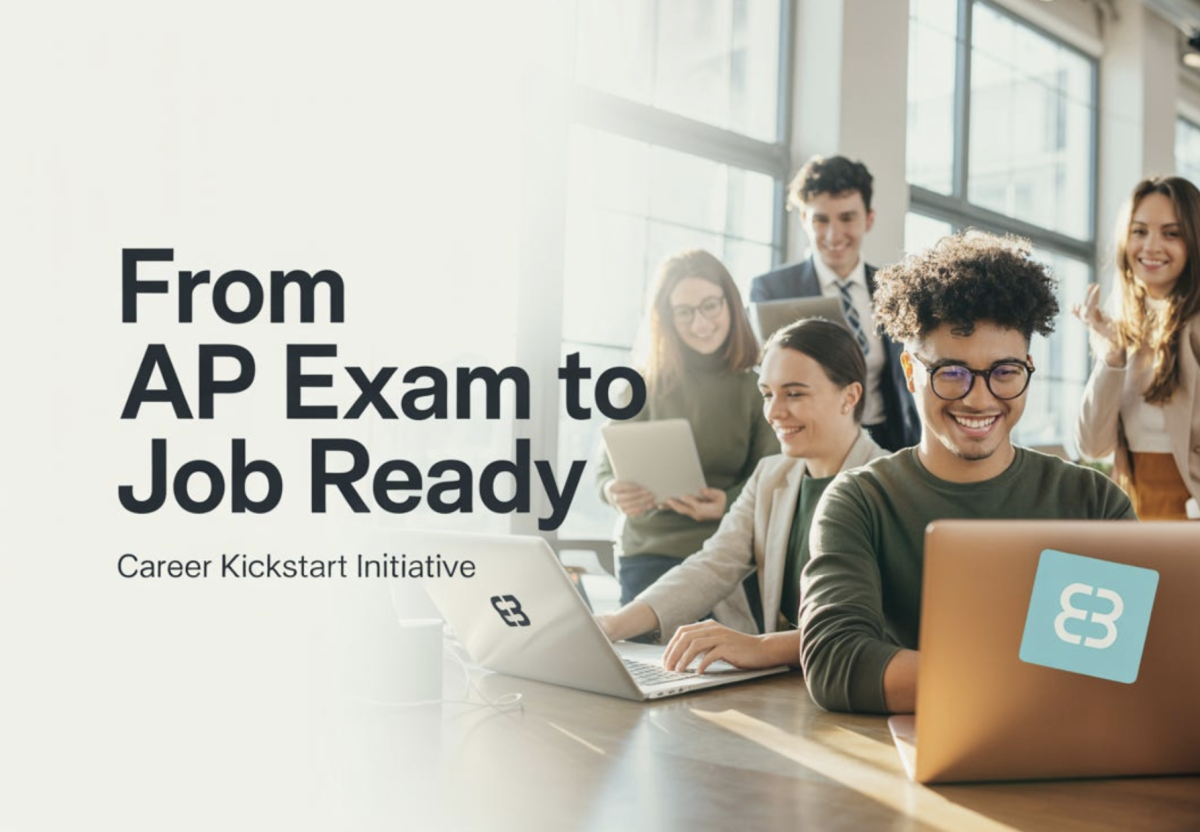
The College Board is testing and rolling out a new set of AP courses that show noticeable differences from existing APs. AP Cybersecurity and AP Business and Personal Finance, two new topics under the general branch of “AP Career Kickstart,” have been introduced.
Each class has a unique focus on career and technical education (CTE) and a standard classroom curriculum. Prototyping with pilot schools started in 2024, and AP Cybersecurity may see full rollout as soon as late 2026. A third course, AP Networking, is expected to be added in the future.
“Personally, I think I’ll take AP cybersecurity because I think it’s important to learn about computer security in general,” James Cho (9), computer enthusiast, said. “I believe in modern-day society, individuals should at least be aware of how malicious users of the internet think and prey on one’s data, specifically, what vulnerabilities they exploit.”
AP Cybersecurity, the first of the Career Kickstart initiative, will immerse students in practical, real-world scenarios regarding proper online security practices, identifying common vulnerabilities, and patches to the vulnerabilities. AP Business and Personal Finance, the second of the series, will cover a diverse set of topics, including marketing, entrepreneurship, and management.
The addition of new, rather radical AP courses followed a survey, “Hiring Managers on Entry Level Preparedness,” which revealed that 84 percent of surveyed hiring managers believed most high school students were not ready for the workforce. A further 80 percent agreed that the current generation of high school students is less prepared for the workforce than the previous generation. In response to this, the College Board decided to roll out AP Career Kickstart to merge the technical usefulness of CTEs with the classroom rigor of APs.
CTE, otherwise known as vocational education, and AP traditionally exist on separate paths. CTE typically takes place in workplaces or, now more commonly, through online curricula, while APs would be taught in high schools. Career Kickstart would be the first instance of an intersection between the two.
“I think it’s an interesting, if unproven concept,” Jake Koh (10), aspiring entrepreneur, said. “Take AP Business and Personal Finance, for example: the course seems to provide a lot of knowledge in setting up businesses, from pitching an idea to preparing financial documents. However, I think the course will require a lot of testing and prototyping before we can get any concrete results.”
Career Kickstart may offer a significant shift away from strictly classroom-bound AP courses that dominate today’s curricula. The objective of the new courses is to directly provide students with practical experience with the industry that they desire to work with. On top of the standard college credits found in most, if not all, AP courses, students partaking in the program can expect to earn professional certificates endorsed by local businesses and even the US Chamber of Commerce, which may be a notable strength when applying to jobs or proving skills.
The hope is that the professional certificates and industry experience provided by the courses will ease the individual’s integration into said field and improve their readiness. In an economy and job market that experiences rapid change, professionally accredited readiness and pre-established experience could be a critical strength for finding and ensuring job stability.
All three planned courses will have five units as well as a final AP exam that tests the students’ skills not only in a pure theoretical sense, but also more practically and realistically. Whether it will truly impact the workforce readiness of the next generation of high school students is up for debate, but most employers are hopeful that this will indeed be the case.
While the prospect of the new AP courses being offered at SIS is still vague, the concept does offer an interesting opportunity for students to become familiar with their desired industry in a high school environment.