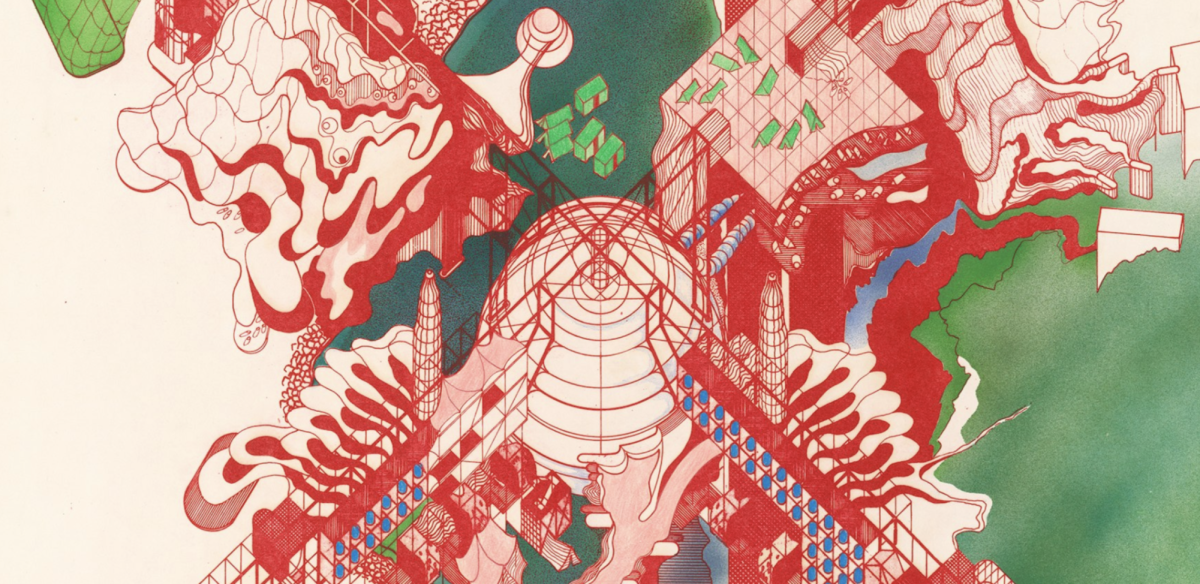
From Leonardo da Vinci’s anatomical sketches to the abstract constructions of Cubist paintings, the art of freehand sketching has been a fundamental practice in virtually every branch of knowledge. The practice has long been celebrated for its encapsulation of timeless human creativity, allowing people to convey concepts visually with metaphysical nuance.
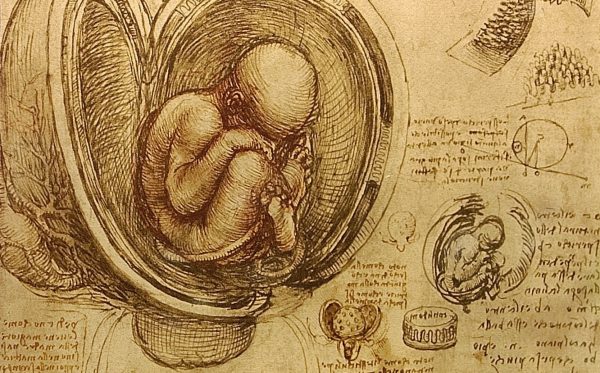
Back in the fifteenth century, far before the development of digital rendering—let alone photography—Da Vinci scrawled diagrams of the human anatomy with meticulous fidelity. Creating rough outlines with silverpoint on bone-powder parchment and finalizing with crisp lines of ink with a goose feather, he devised near-perfect depictions of bones and organs, with every crevice and cavity accurately portrayed in his notes. Modern scientists credit him with the first accurate depiction of the human spine, among many other accomplishments.
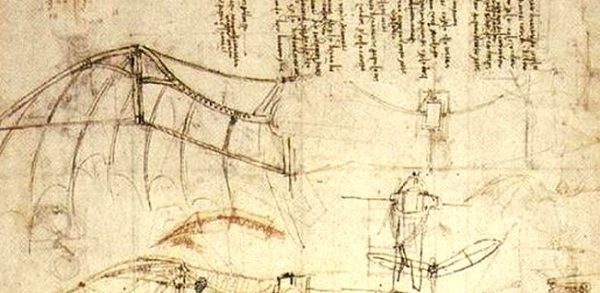
The influence of his sketches extends beyond anatomy, also forming the foundation of mechanical engineering. He imagined practical blueprints of military tanks and flying machines far ahead of his time. He had even devised the prototype for what others would call the first robot. Although most of his drawings were either abandoned or lost to time, many proved mechanically sound. For instance, the construction of his hang glider design at the University of Liverpool proved it was aerodynamically viable.
At the crux of his revolutionary concepts and ideas are the hand-drawn diagrams that humanity cherishes, regarding his notes in reverence and awe.
Yet the tradition of hand-drawing is dwindling, fading like the forgotten drawings that died with time.
It is the rise of technology, what we consider “the pinnacle of human ingenuity,” that has engulfed life as we know it. Namely, the inconsistent and often time-consuming practice of drawing by hand has largely been replaced by technological advances that enable unprecedented accuracy and efficiency among many other trades.
No longer do we have to depend on our wobbly lines and uneven angles. Spheres can be generated to perfection. Textures and patterns flow seamlessly across surfaces. A digital sun casts shades and shadows as you position the objects to your desire. Drawing on an iPad with a digital stylus quite accurately imitates hand-drawing on paper, so even the act of hand-drawing seems to be integrated into the growing digital landscape.
Right before our eyes, the value of drawing is diminishing, its prominence reduced by the rise of artificial intelligence, 3D printing, and numerous art applications that continue to develop. The limitations of drawing by hand are eclipsed by the sheer magnitude of possibilities that branch from these innovations. Why would people not abandon hand-drawing, what is seemingly an archaic archetype of self-expression?
Undoubtedly, hand drawing our visions onto paper is restraining, but what if it is an essential step veiled in inconvenience, a nostalgic nuisance that subtly grounds us in reality?
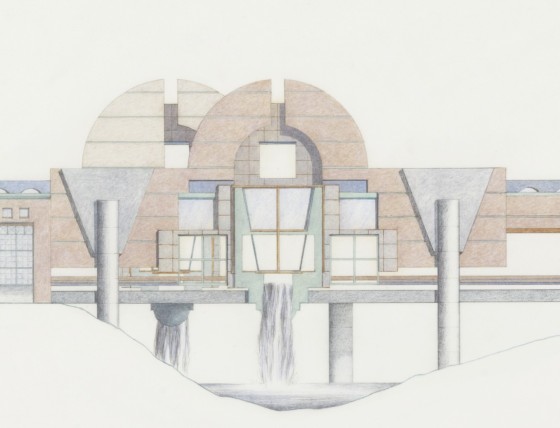
Michael Graves, an architecture professor at Princeton University, describes the act of drawing by hand as a “shared language” that “stimulates the imagination and allows us to speculate about ideas.”
During a faculty meeting at Princeton, in a bout of boredom, Graves began sketching a building from one of his projects. He noticed a colleague looking at him draw. When he hit a wall, Graves passed his note to the colleague, and a small game of drawing commenced. They passed the note back and forth, adding lines silently but in complete synchronization and understanding.
Graves finds this “emotional content” imbued in hand designs analogous to how a musician might riff in jazz, playing notes that “subliminally [place] a smile on your face,” or how reading a novel instead of hearing it read aloud “allows us to daydream a little,” speculating the exigence of every minute word or pause.
Graves views the art of freehand drawing as inherently another form of visceral communication.
Recently, the SIS art students displayed their artworks, ranging from paintings and drawings to cardboard sculptures, 3D structures, and clothing. These delicate projects, meticulously designed throughout a whole school year, can all be “theoretically” generated in a matter of hours.
But even for digital drawing, these tools and methods raise an unavoidable question: how personal and reflective is the product truly when processed through a cascade of tools and neat functions that smooth out the rough edges? How intimate can an artist truly be with products with hints of inhuman precision and consistency? If we put it in musical terms, does the bowing and vibrato provided by a motorized device truly capture the emotional depth and breadth that musicians can achieve without it?
The notions Graves presents have also been embodied by architect Peter Cook, a revolutionary figure who was knighted by Queen Elizabeth II for his services to the field.
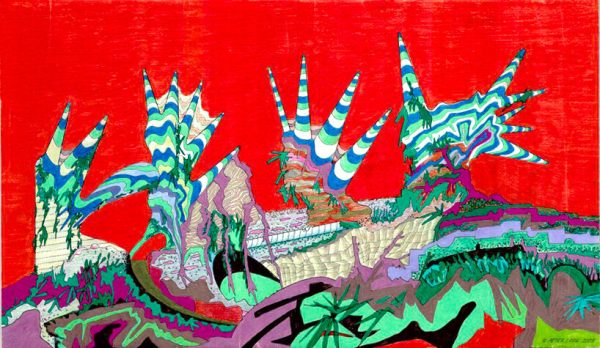
He embraces a rather radical view on the possibilities of architecture, but the stress he puts on hand drawing remains equally potent as that of Graves. As Cook draws the buildings, he adds cartoons of individuals who inhabit the space.
“The building [I was working on] became very much to do with anecdotes,” Cook said. “[I imagine] what happens when the student who’s been on the beach is coming in and is suddenly seen by the head of the school, what happens to the couple who are kissing under the awning of the deck, what happens to the person being observed, but can’t see the observer, and what happens to the pompous guy giving a lecture.”
Cook admits that he is not a great artist, but the struggle of drawing by hand allows him to imagine people mingling in the space he creates, interacting with every corner and corridor of his buildings. The process of drawing isn’t an inconvenience or a detour, but a vital step that gives the creation life.
Da Vinci was a savant of his time, but he, too, had flaws that held him back from his desires. He was a devout perfectionist, but his curiosity led him to abandon his projects, resulting in thousands of pages of notes but relatively few complete works. But it is the realization that the process of failure is what makes drawing by hand that much more captivating than perfect digital renditions of our minds’ creations. In other words, it is the very inconvenience of hand drawing that ensnares you in the art.
People will likely continue to indulge in digitally rendered, AI-generated designs and diagrams for convenience, freeing up time and resources for other projects or hobbies. But those of us who want to experience life deliberately will transpose ourselves back in time, recognizing the latent yet cumbersome potential of drawing. Our hand drawings may not revel in the same praise that Da Vinci’s work does, but perhaps they become the most personal and emotional depictions of our soul.
As Michael Graves reminds us, drawing by hand leaves our imagination to flourish, “a good sign we’re truly alive.”