A league-topping pitcher. A Korean Baseball Organization (KBO) League superstar. A lineup that promises good contact hitting alongside the power to drive in runs. On paper, the San Fransico (SF) Giants should be a serious team that could contend for a top spot in its division.
They are not.
The Giants’ current win-to-loss ratio ranks 5th-to-last in a league of 30 teams, and with some of the lowest total runs scored in the entire Major League Baseball (MLB), the Giants have not been the powerhouse team that their fans had hoped for.
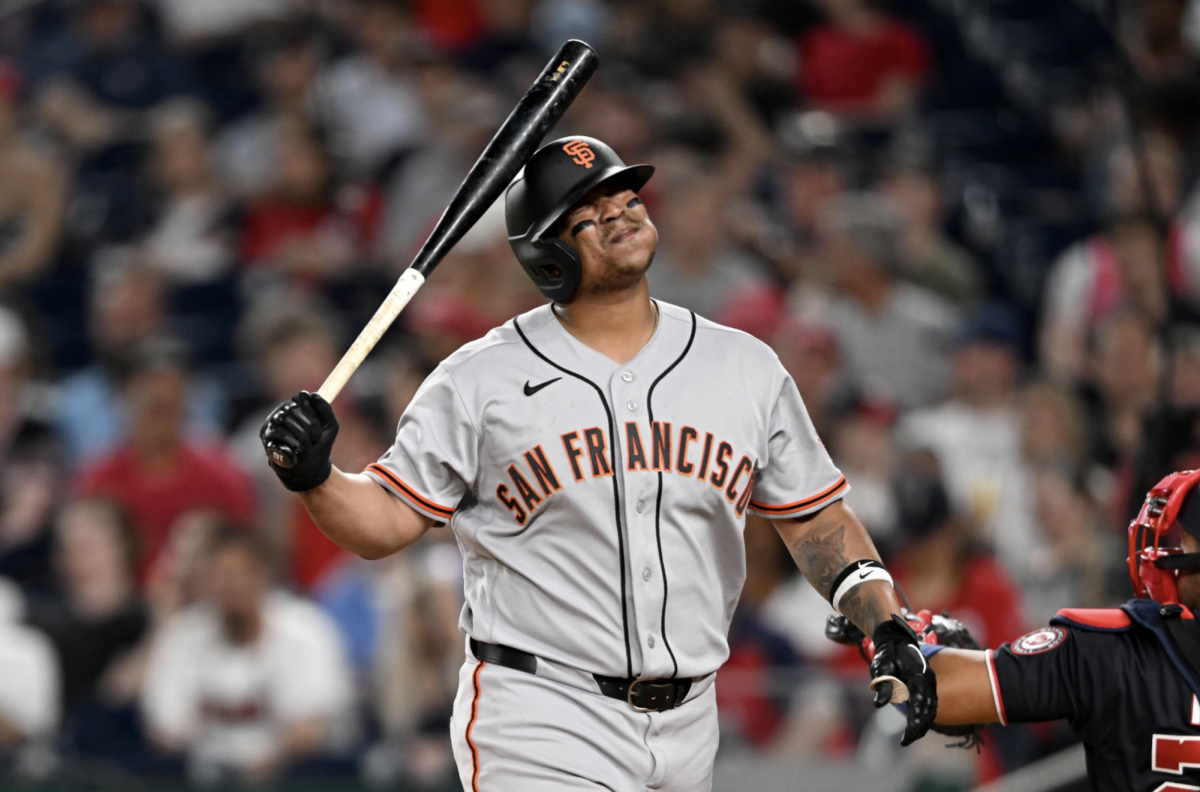
The roots of the issue, most experts and fans agree, lie in the Giants’ lackluster offense. It’s easy to point to a cold mid-lineup bat, a bad trade, or even a slow start from a KBO import as the one dragging down the team, and truth be told, it’s not entirely wrong. However, baseball offense can rarely be carried by one individual. It is a collective effort that requires multiple batters to hit the ball, get on base, and drive in runs. A weak offense generally entails a larger systemic issue with the team and its ability to coordinate its lineup.
One of the Giants’ largest offensive problems is that the team has weak slugging. That is, the team’s overall batting strength is low across the roster. In baseball, this ability is primarily measured by offensive metrics, namely Weighted Runs Created Plus (wRC+), Weighted On-base Average (WOBA), and On-Base Plus Slugging Percentages (OPS). On all three metrics, the Giants are lagging behind the league average at 88, .294, and .654, respectively, against the league averages of 100, .315, and .700. Even to a layperson, it is apparent that the Giants are not meeting the league average in terms of hitting power. The importance of hitting powerful shots lies not only in scoring electric home runs but also in clearing bases and ensuring that winning runs reach the winning position as quickly as possible.
On top of the weak slugging, the team also has a walk rate sitting at 5.5%. For context, a walk is given when a pitcher misses the strike zone four times without the batter swinging at any one of them, and it is a generally solid metric for plate discipline. A low walk rate means that not only are the Giants missing out on “free” runners, but also striking out just as much as each missed walk is an out. This creates a two-way problem: the Giants are unable to take advantage of bad pitching, and they are being outplayed too often, both contributing to their lack of scoring potential.
The team’s weak slugging and low walk rate not only applies to their starters but also permeates to their bench. In baseball, the bench is the team’s group of substitute players that can be strategically inserted, often during late innings, to provide platoon advantages to score runs. The Giants lack this, not only with their bench performance, being unable to get favorable matchups often, but also with their bench depth and variety. And when a lineup cannot threaten a pitcher with strong pinch hitters, the opposing manager has a much easier time navigating their bullpen and therefore expects greater game performance, especially in terms of pitching.
However, their season is not yet over. Baseball’s 162-game structure is meant for second-half surges and unexpected plays, and the Giants have recently shown that they have the lineup to do so. Despite trailing in the early games, most of their players are starting to move past their slow start. Important contact hitters such as Jung Hoo Lee and Luis Arraez are both hitting above .300, which is considered elite in baseball, and power hitters such as Willy Adames, Rafael Devers, and Casey Schmitt are all of respectable numbers of runs batted in (RBI).
The collective ability of the Giants had been put on full display in a landslide 19-6 victory against the Colorado Rockies. However, this came at the behest of a five-game losing streak, reminding fans that, despite the Giants having the necessary talent and time, the pieces must be used strategically. It is unwise to see a struggling offense as the result of one individual and that replacing that one individual will magically solve the team’s problems. The Giants must understand that they are dealing with a historic and systemic issue composed of multiple components, and therefore, each one should be addressed at least partially. Only then may the team and its fans enjoy the premier offense that could be expected out of a genuinely talented roster.